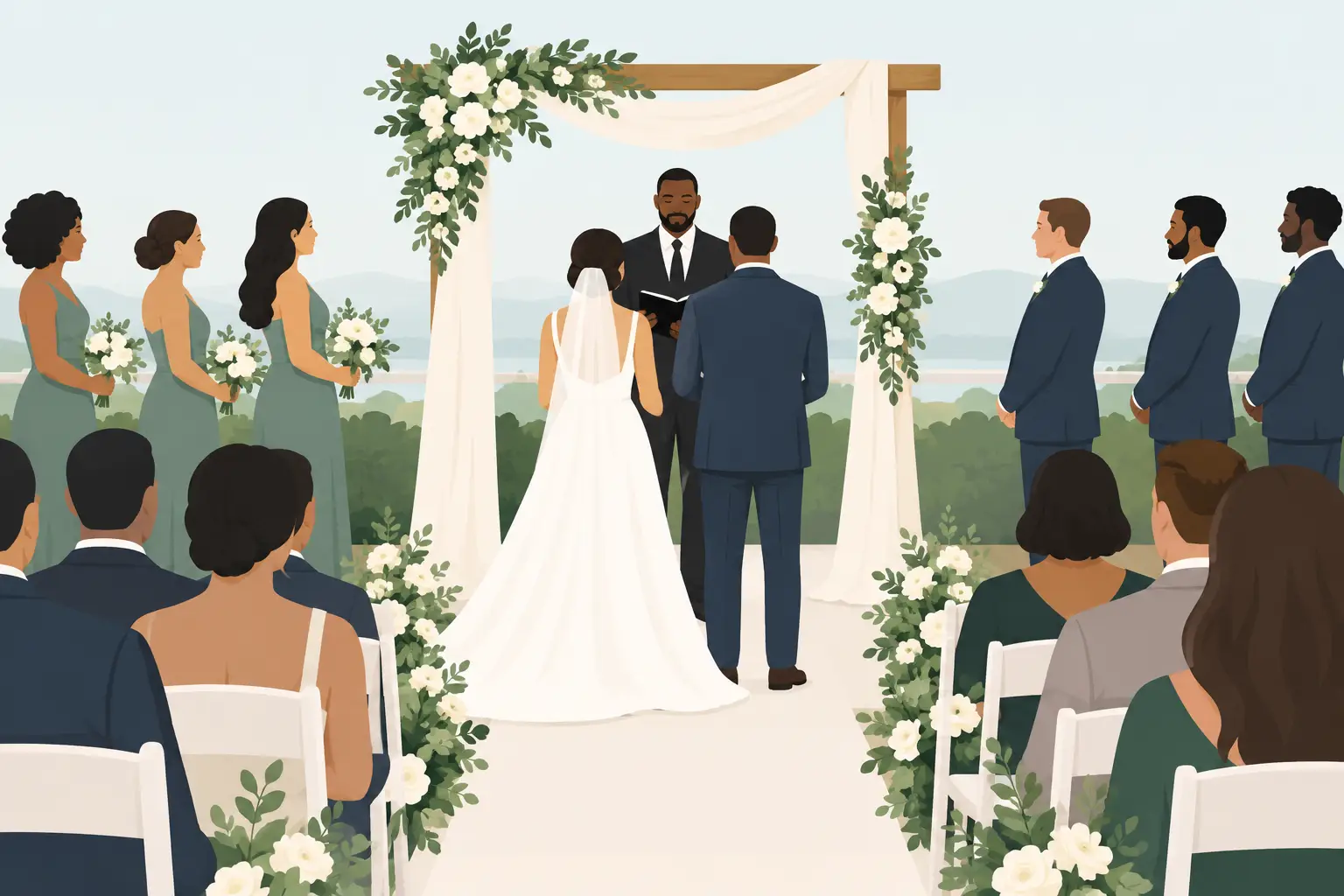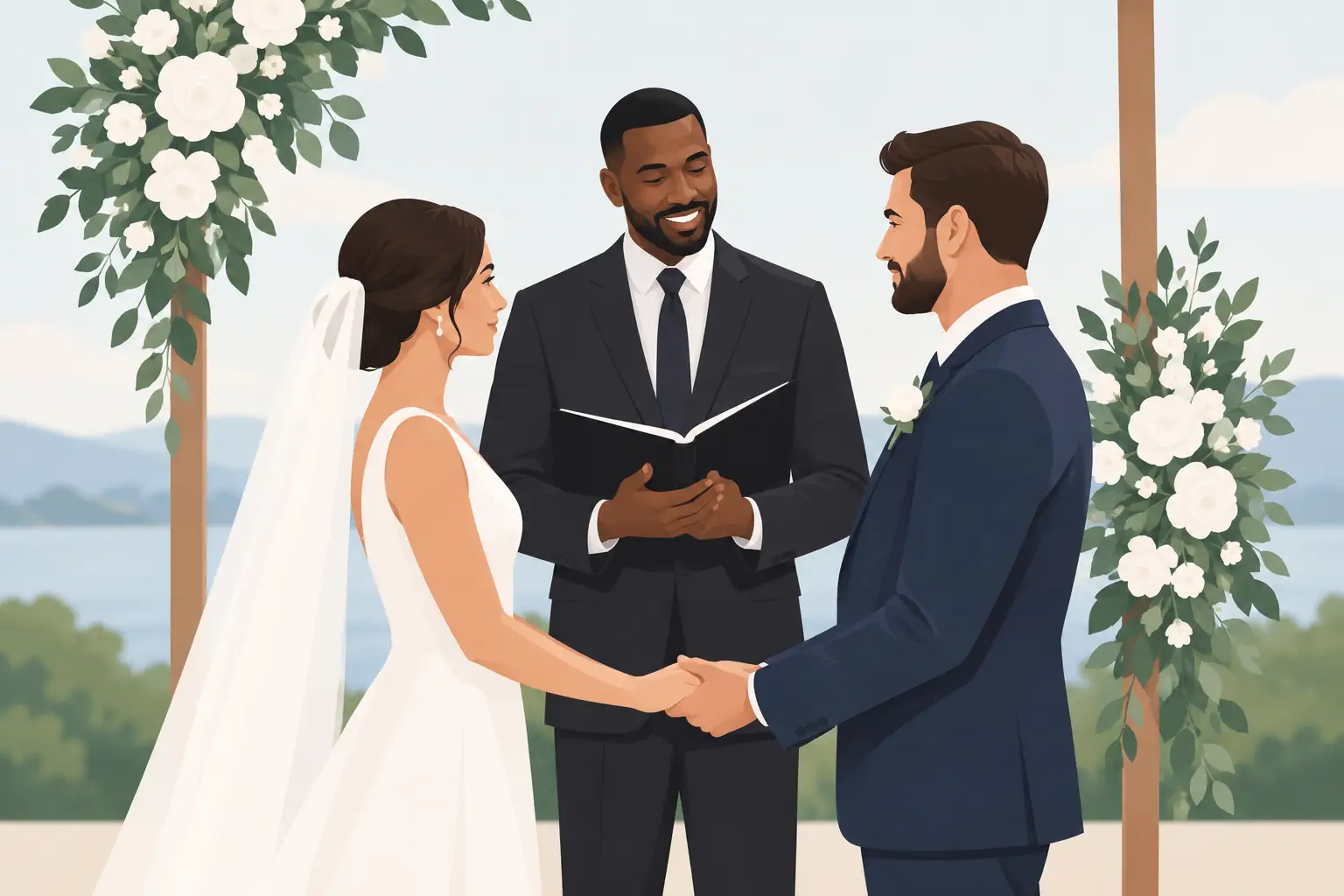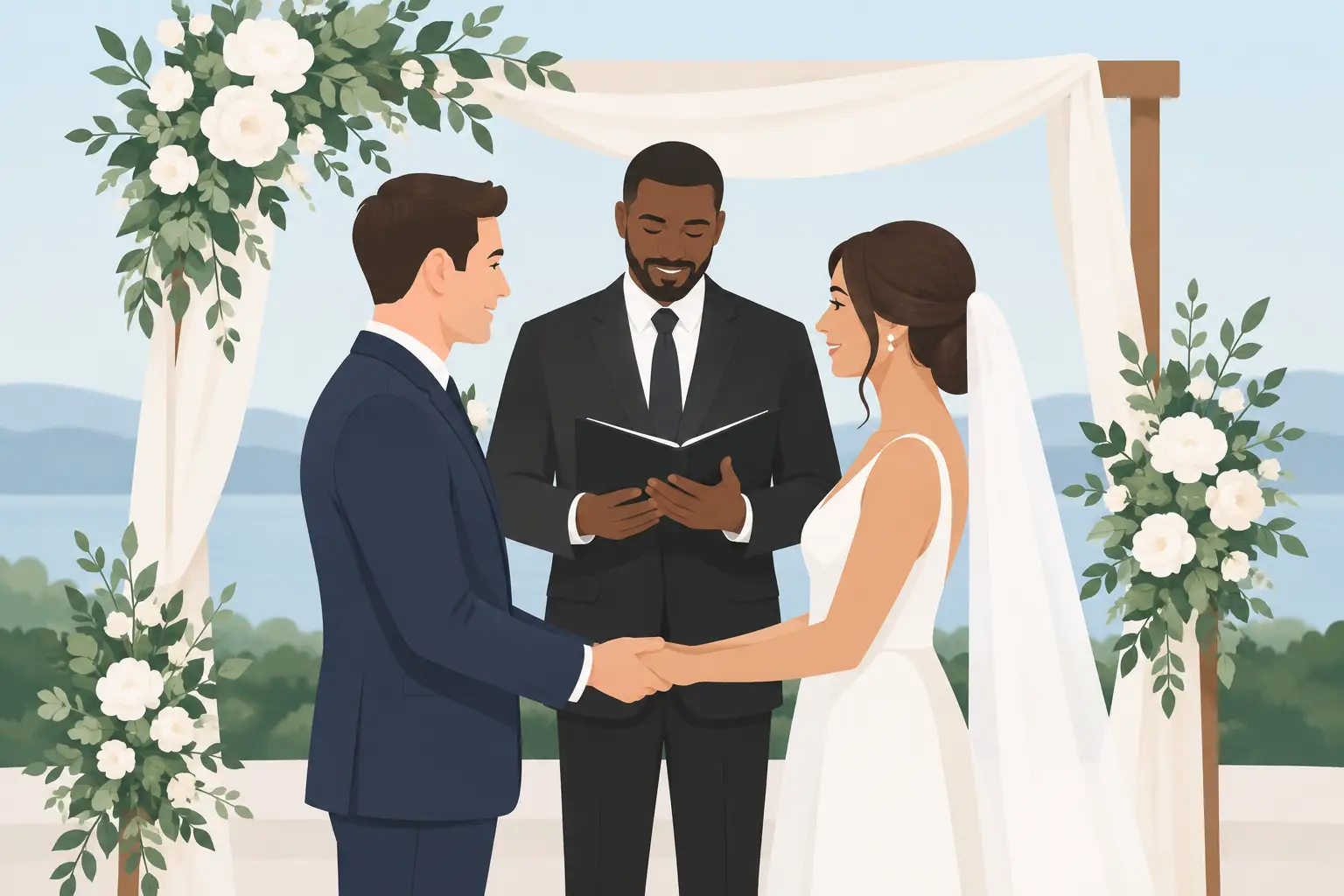
A wedding ceremony may last only 15 or 20 minutes, but it carries the words, promises, and moments your guests will remember long after the reception ends. This wedding ceremony planning checklist helps you give that time the care it deserves, without turning it into another stressful item on an already full planning list.
The best ceremonies feel natural because they have been thoughtfully prepared. They make room for your story, your beliefs, your people, and the practical details that allow everyone to be present when the moment arrives.
Start With the Meaning You Want to Create
Before choosing readings, music, or even the order of events, talk together about how you want the ceremony to feel. Perhaps you picture something joyful and lighthearted. Maybe you want a quiet, deeply emotional exchange of vows. Many couples want both – sincere words, a few well-placed smiles, and a warm celebration that feels true to them.
Consider what you want your guests to understand about your relationship. Is your shared history central to the ceremony? Do faith, family traditions, cultural customs, or a love of the outdoors belong in the moment? There is no single right answer. A meaningful ceremony does not need to follow every tradition, and it does not need to avoid tradition either. It simply needs to reflect the two people making the commitment.
Your officiant should help guide this conversation, listen closely, and turn your preferences into a ceremony with a natural flow.
Your Wedding Ceremony Planning Checklist
As you work through the details, keep the bigger purpose in view: you are creating a promise, not staging a performance. This checklist can help you make decisions in a calm, sensible order.
- Choose an officiant whose style, experience, and values make you feel comfortable.
- Confirm your ceremony date, start time, venue address, and an indoor backup plan if the celebration is outdoors.
- Decide who will be included in the processional, ceremony, and recessional.
- Talk about the overall tone: traditional, spiritual, secular, faith-centered, humorous, intimate, or a blend.
- Select any readings, poems, blessings, cultural traditions, or unity rituals.
- Write personal vows, choose repeat-after-me vows, or combine both approaches.
- Select ceremony music and identify who will cue each piece.
- Confirm the marriage license requirements and who is responsible for bringing the license to the ceremony.
- Schedule a final planning conversation and, when appropriate, a rehearsal.
- Share a simple ceremony timeline with your wedding planner, photographer, musicians, venue coordinator, and wedding party.
You do not need to decide every element at once. In fact, many couples find that the clearest ideas come after they have first talked through their story and priorities with their officiant.
Choose the Right Ceremony Structure
Most wedding ceremonies include a welcome, an acknowledgment of the couple and their guests, words about marriage or the couple’s story, vows, rings, a pronouncement, and a kiss. That familiar framework is useful because it gives everyone a sense of movement and meaning.
Within that structure, there is plenty of room for personality. You may invite loved ones to offer readings, include a remembrance for family members who cannot be present, or recognize children and blended families. You might add a handfasting, wine ceremony, sand ceremony, or another ritual with personal significance. If a ritual is included only because it looks good in photos, it may feel less meaningful in the moment. Choose elements that genuinely belong to your relationship.
Keep timing in mind. A ceremony with several readings and rituals can be beautiful, but it needs clear transitions and a pace that holds guests’ attention. For most gatherings, a focused, heartfelt ceremony is more memorable than one crowded with too many ideas.
Plan Your Processional With Care
The processional sets the emotional tone before anyone speaks. Decide who will walk, in what order, and whether anyone needs an escort. There are no rules requiring one particular arrangement. Couples can enter together, separately, with parents, with children, or in a way that honors their own family relationships.
Walk through the venue before the wedding if possible. Notice where the wedding party will stand, how much room is available, where musicians will be located, and whether guests will be able to see and hear. Outdoor sites throughout Oregon and Southwest Washington can be especially beautiful, but wind, uneven ground, traffic, and changing weather are real considerations. A microphone and a thoughtful backup plan can make a great difference.
Give Your Vows Enough Time
Personal vows often become the heart of the ceremony, which is why they can feel intimidating. Begin with a few simple questions: What do you admire about your partner? What has your relationship taught you? What promises do you want to make for ordinary days as well as milestone moments?
You do not have to read a long letter. Two or three sincere promises can carry more weight than a page of polished language. If speaking personal vows feels too vulnerable, you can exchange private letters before the ceremony and use traditional or repeat-after-me vows in front of guests. The best choice is the one that lets you be fully present.
Handle the Legal Details Early
The legal portion of a wedding is usually simple, but it deserves attention before the wedding day. In Oregon, couples obtain a marriage license through a county clerk and should understand the county’s timing, identification, fee, and return requirements. In Washington, requirements are different, including the county process and waiting period. Your ceremony location matters, so confirm the rules for the state and county where you will marry rather than relying on advice meant for another area.
Bring the license to the ceremony, and designate one reliable person to make sure it is not left in a hotel room, vehicle, or getting-ready suite. Ask your officiant who will complete and return it after the ceremony. A calm plan for the paperwork protects the joy of the day.
Make Space for a Rehearsal or Final Walk-Through
Not every wedding needs a formal rehearsal. For a small ceremony with only the couple, officiant, and a few guests, a brief call or venue walk-through may be enough. A larger wedding party, complicated processional, young children, cultural elements, or multiple musicians may benefit from gathering everyone the day before.
A rehearsal is not about perfection. It is about helping people know where to stand, when to walk, and who will hold the rings. This is also the time to confirm names, pronunciation, microphone use, and the cues for music. When those details are settled, everyone can relax and focus on you.
Share the Ceremony Plan With Your Team
Your photographer needs to know if there will be a first look, a unity ritual, or a surprise reading. Your DJ or musicians need the exact processional and recessional cues. Your planner or venue coordinator needs to know when guests should be seated and when the wedding party should line up.
A one-page timeline is usually enough. Include arrival times, the ceremony start time, the order of the processional, the approximate ceremony length, and the recessional plan. Give it to the people who need it, then let them do their work. You should not be answering logistics questions moments before you say your vows.
Let the Ceremony Sound Like You
A personalized ceremony is not about finding the most dramatic words. It is about recognizing the life you have built and the life you are choosing together. A skilled officiant can bring warmth, structure, and a steady presence to that work, whether you are planning a Portland celebration, a coast or mountain destination wedding, or a gathering across Southwest Washington.
At DG Wedding Bliss, the ceremony is treated as more than a legal requirement. It is a chance to honor a unique love story with care, clarity, and genuine feeling.
As you check off each decision, leave a little room for the unplanned moments too: the deep breath before the processional, the laughter when a ring is briefly difficult to place, the look you share when the room falls quiet. Those are often the moments that make a ceremony unforgettable.